Garbage Sorting in Japan — It's Even More Complicated Than You Think
 Keiko
KeikoToday I want to talk about something that trips up almost everyone living in Japan: garbage sorting (ゴミの分別 / gomi no bunbetsu). It's often said that Japan's waste separation rules are incredibly detailed — and I know other countries have their own strict systems too. But let me walk you through what it actually looks like here, so you can compare it with where you live.
- The Rules Vary by Municipality
- Burnable Waste — The Biggest Difference
- Plastic — Another Big Variable
- Even Locals Get Confused
The Rules Vary by Municipality
The first thing to understand is that garbage sorting rules in Japan aren't set nationally — they're decided at the city, town, or village level. And broadly speaking, there's a real difference between urban areas and rural areas.
Cities tend to have fewer categories to sort into, while rural areas often require much more detailed separation.


Burnable Waste — The Biggest Difference
The category that varies the most is what's called burnable waste — sometimes labeled "可燃ごみ" (kanen-gomi), sometimes "燃やすごみ" (moyasu-gomi), and sometimes "燃やせるごみ" (moyaseru-gomi), depending on the area.
In cities, food waste is usually thrown in with burnable garbage. But in some rural areas, food waste is collected separately and turned into compost.
I think this comes down to infrastructure. Cities tend to have larger-scale incineration facilities — in Tokyo, for example, some processing plants actually capture the heat generated during incineration and convert it into electricity and steam, recycling it as new energy. Rural areas, on the other hand, often have more land and facilities for composting. Each region is finding the recycling approach that works best for its situation — which I think is pretty cool, honestly.

Plastic — Another Big Variable
The other major difference is how plastic is categorized. Here are three examples from places I know well:
- Setagaya, Tokyo: Plastic products are treated as burnable waste
- Yokohama, Kanagawa: Plastic products are treated as recyclable waste
- Rankoshi, Hokkaido: Plastic products are non-burnable waste, while plastic packaging is recyclable
These differences exist because each municipality has its own waste processing and recycling infrastructure. Even within recyclables, the rules vary — some areas want steel cans and aluminum cans separated, others let you combine them. It really is different everywhere.
Even Locals Get Confused
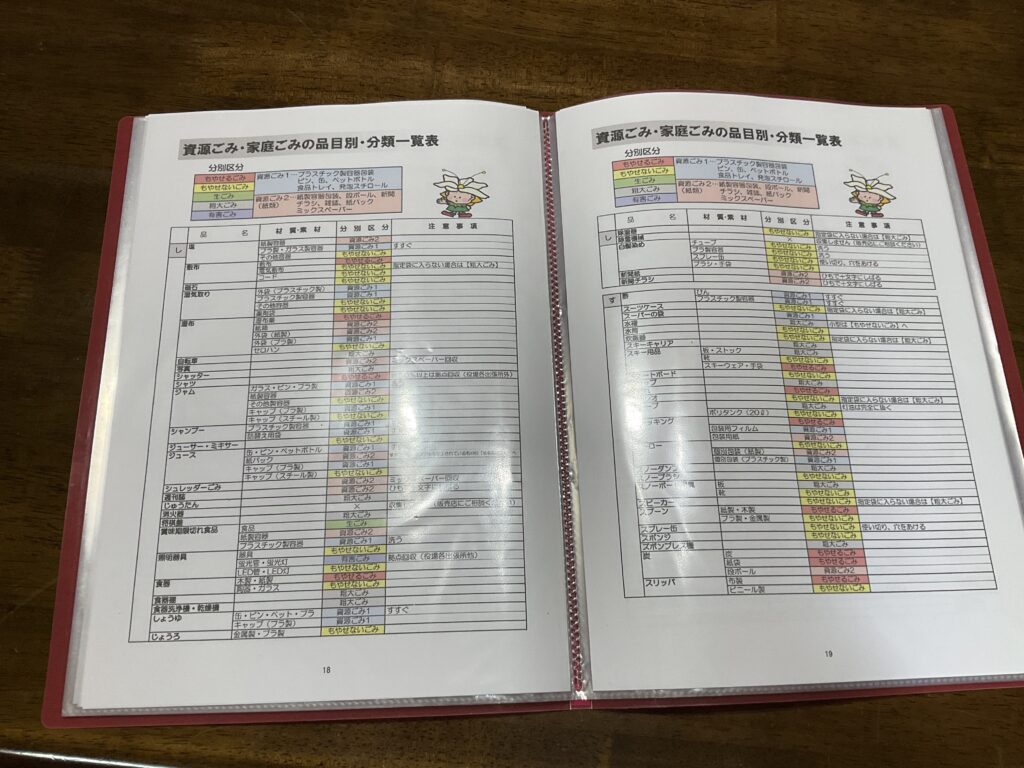
Honestly, these regional differences confuse everyone living in Japan — not just foreign residents. Municipalities know this, so most offer sorting apps, printed guides, and even phone hotlines to help residents figure out the rules.
It's also common for the sorting rules at your home to be completely different from the rules where you work.
My husband and I currently split our time between Yokohama and Rankoshi from spring through autumn, and the collection methods and pickup days are completely different between the two. Every season, it takes us a little while to readjust!
Comparing Four Areas I Know Well (as of 2026)
Here's a side-by-side look at the rules in four places that are personally significant to me. Setagaya, Tokyo1 Categories: burnable waste, non-burnable waste, …
 A Japanese Life