Kei Cars — Japan's Beloved Mini Vehicles
 Keiko
KeikoHave you heard of kei cars (軽自動車 / keijidōsha)? They've been getting some attention overseas lately, and I think they deserve it. Let me give you a proper introduction to what they are, who drives them, and why they make so much sense in Japan.
- What Exactly Is a Kei Car?
- Why Do People Choose Kei Cars?
- Who Actually Drives Them?
- How Much Does It Actually Cost to Own One?
- What Types of Kei Cars Are There?
What Exactly Is a Kei Car?
To officially qualify as a kei car in Japan, a vehicle has to meet all four of these criteria:
- Engine displacement: 660cc or less
- Dimensions: no longer than 3.4m, no wider than 1.48m, no taller than 2.0m
- Passenger capacity: up to 4 people
- Maximum payload (for commercial vehicles): up to 350kg
Small? Absolutely. But as you'll see, small comes with some serious advantages.
Why Do People Choose Kei Cars?
The benefits are pretty clear once you know the Japanese context:
Lower purchase price — Kei cars are considerably cheaper to buy than regular-sized cars.
Lower running costs — Annual taxes, vehicle inspections, and fuel costs are all cheaper. I'll break down the numbers in a moment.
Easy to manoeuvre — Japanese roads, especially in older neighbourhoods and rural areas, can be surprisingly narrow. A kei car handles those tight spots in a way a regular car simply can't.
Who Actually Drives Them?
This is just my personal impression, but the picture is pretty different between urban and rural Japan.
In rural areas, kei cars are everywhere. Public transport isn't always convenient outside the cities, so it's common for each person in a household to have their own car — and a kei car fits that "everyday workhorse" role perfectly.
In Tokyo, I barely remember seeing kei cars about 30 years ago. These days they're all over the place. Part of that is because modern kei cars have genuinely spacious interiors and come with features that match regular cars. But I also think attitudes toward cars have shifted. There used to be a strong culture of young people really wanting to own a car — it was almost a status thing. Now, a lot of younger people just aren't that interested in cars at all. And with car-sharing services and rental options so readily available, many people simply don't feel the need to own one. If they do need a car, a practical, affordable kei car often makes the most sense.
How Much Does It Actually Cost to Own One?
1. Annual Vehicle Tax (自動車税)
This is a tax you pay every year, and it's one of the biggest financial advantages of kei cars. While regular cars are taxed based on engine displacement — ranging from ¥25,000 to ¥110,000 per year — kei cars have a flat rate. It's \10,800.
Here are the rates as of 2026:
Annual Vehicle Tax (自動車税) in Japan
This is a tax you pay every year, and it's one of the biggest financial advantages of kei cars. While regular cars are taxed based on engine displacement — ran…
 A Japanese Life
2. Vehicle Inspection (車検) and Annual Check-up
Japan requires all vehicles to pass a mandatory safety inspection called shaken (車検) — essentially every two years. This applies to both regular cars and kei cars. For a kei car, you're typically looking at around ¥40,000–¥100,000 each time, depending on the condition of the vehicle.
On top of that, there's an annual maintenance check in the years between inspections, which usually runs about ¥10,000–¥20,000. Any repairs flagged during these checks add to that cost, of course — as do part replacements based on mileage or age.
So in practice, there's some kind of inspection or maintenance cost every year. (One small grace: brand-new cars don't need their first shaken for three years.)
3. Fuel Efficiency
Kei cars are impressively efficient. As of 2026, the top-rated kei car for fuel economy is Suzuki's hatchback mild hybrid model, which achieves up to 28.2km/L under the WLTC testing standard (the internationally recognised measurement for real-world fuel consumption). Across the various kei car categories, the top performers generally come in at 20km/L or above.
What Types of Kei Cars Are There?
You might be surprised by the variety. Here's a quick overview:
Passenger vehicles
- Super tall wagons (スーパーハイトワゴン) — tall roofline, sliding doors, maximised interior space

- Tall wagons / standard wagons (ハイトワゴン・ワゴン) — the everyday all-rounder

- SUV / crossover (SUV・クロスオーバー) — rugged styling with off-road capability

- Sedan / eco car (セダン・エコカー) — fuel-efficient and budget-friendly

- Other distinctive styles
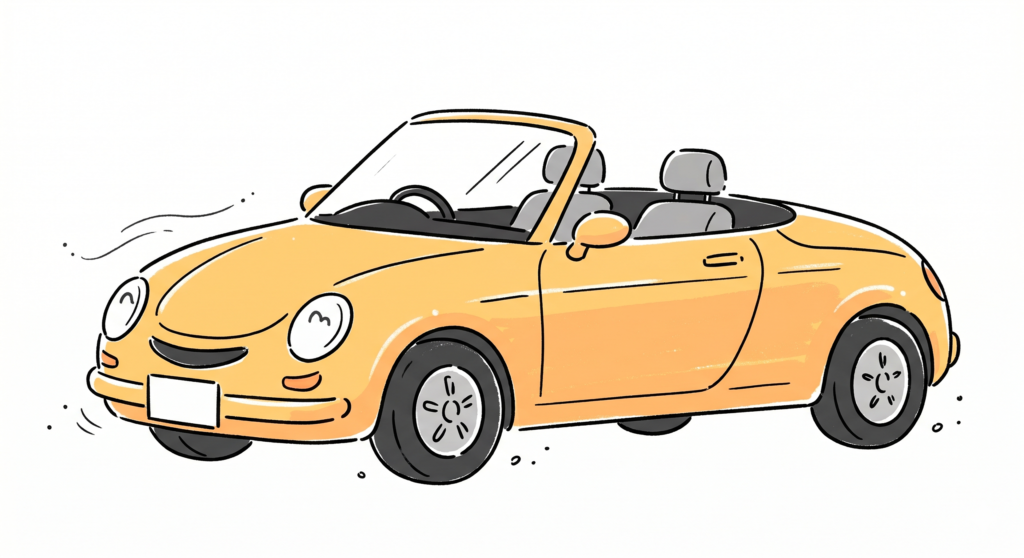
Commercial vehicles
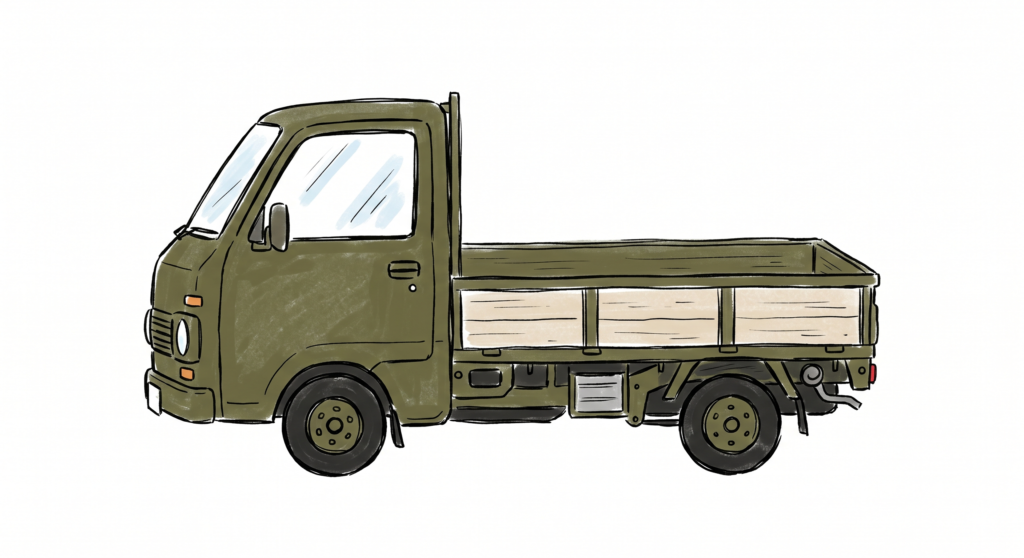
- Kei truck (軽トラック) — open flatbed, a farming staple
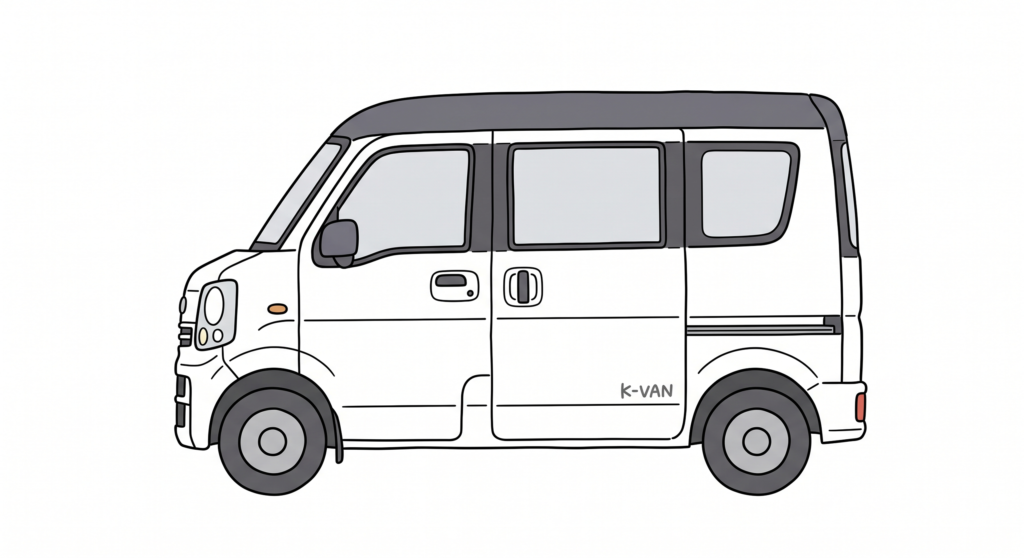
- Kei van / one-box (軽バン) — enclosed cargo space
- Tall commercial wagon (軽ハイトワゴン商用車) — passenger car base with commercial classification
- Bonnet van (軽ボンネットバン) — sedan-based design
For such a small vehicle category, the variety really is impressive. And some models — like the Jimny — exist in both kei and regular-car versions, so you can choose the size that suits you.
So, what kind of kei car would you go for?
※References