How Japan Has Changed, as Told by a Japanese Woman in Her 50s (Part 1): Work in the High-Growth Era and the Father Who Put Work Before Family
 Keiko
Key points of this article
- Japan's era of rapid economic growth (roughly 1955–1973) was a time when it was simply taken for granted that men worked long hours and women looked after the home.
- Shūdan shūshoku (集団就職, "group employment"), in which young people fresh out of junior high school left the countryside together to work in the cities, is another symbol of this era.
- Those values still linger today, in the belief that housework and childcare are "women's work".
What Was Japan's High-Growth Era?
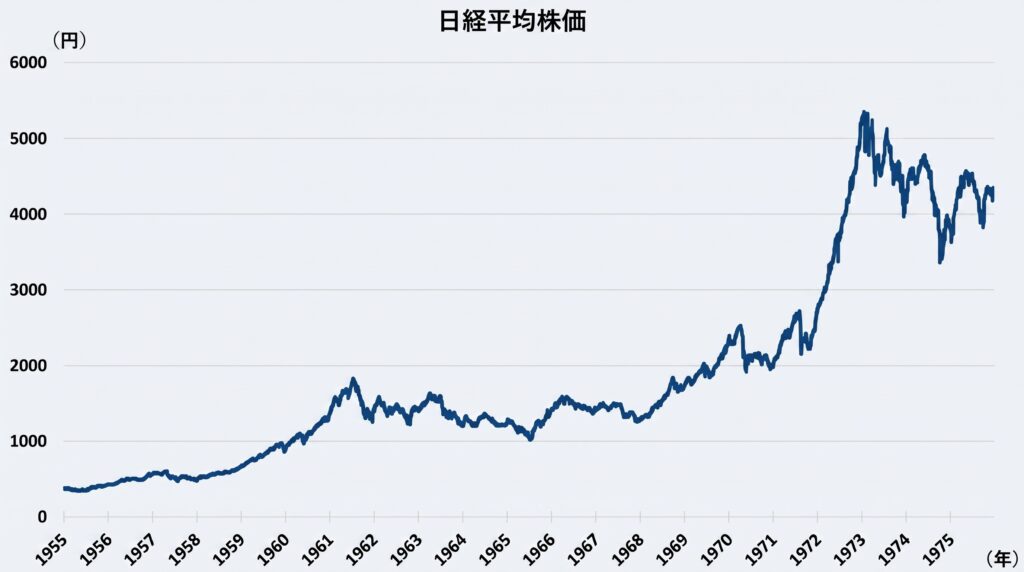
The high-growth era (高度成長期, kōdo seichōki) refers to the roughly 20 years in which Japan's economy recovered rapidly from the depths of the post-war years and kept on growing. It began in the mid-1950s and ended with the first oil crisis in 1973.
People born just after the war, between 1947 and 1949, are known as the dankai generation (団塊の世代, dankai no sedai), Japan's first baby boom generation, and it's the largest generation in Japan. They're the generation of our parents — those of us now in our 50s — and they entered the workforce towards the end of the growth era and helped hold the country up.
What Was Shūdan Shūshoku ("Group Employment")?
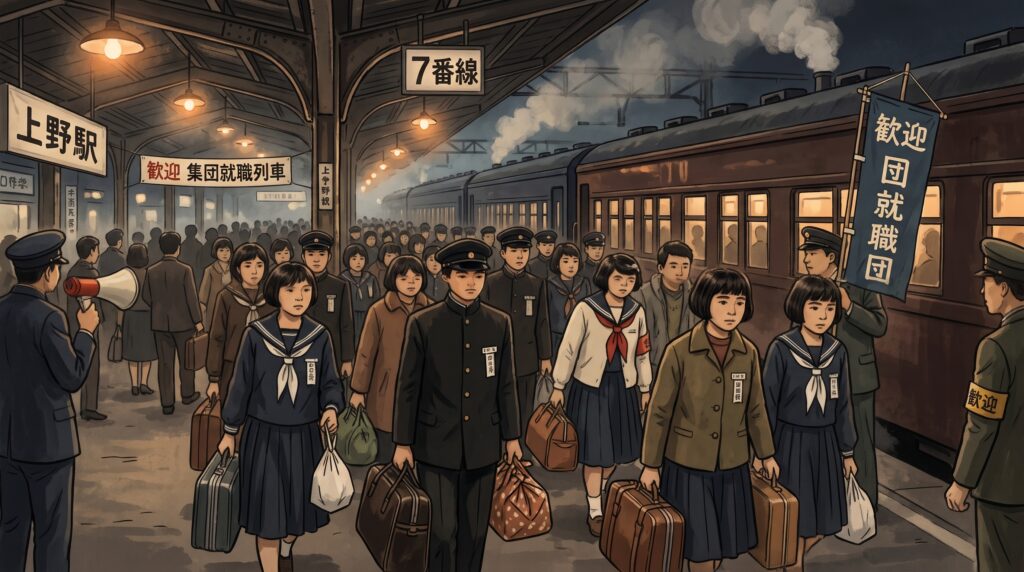
Shūdan shūshoku was a system in which young people who had just finished junior high school in rural areas boarded trains together and went off to work at factories and shops in the cities. Young workers from the countryside filled the labour shortage in the cities.
As factories became more automated and the share of students going on to high school rose above 90%, both the demand for and the supply of workers with only a junior high school education fell, and group employment disappeared in the 1970s.
Men Devoted to Work, Women Keeping the Home
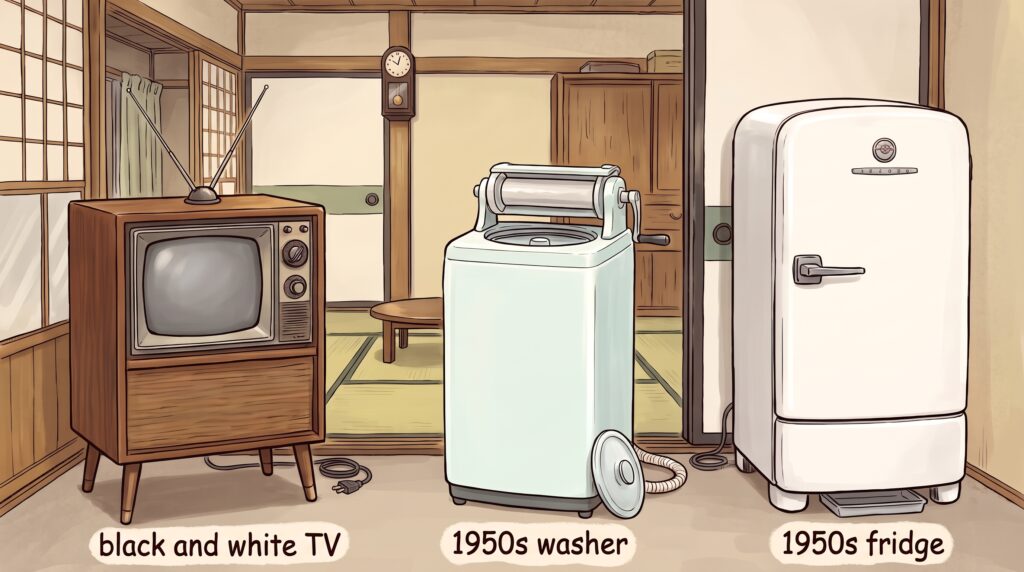
I don't think it's an exaggeration to say that this was a male-dominated society. In many households, the husband threw himself into his job with little thought for his family, and housework and childcare were left almost entirely to his wife.
That's exactly why, I think, women ended up either becoming full-time housewives or working part-time. The economy was strong and a family could live on the husband's income alone, so some women genuinely enjoyed being full-time housewives.
Retired Husbands and "Jukunen Rikon" (Later-Life Divorce)
Among the men who had devoted themselves entirely to work, quite a few couldn't do anything except their jobs once they retired. In 2007, a system was introduced that allowed a couple to split the husband's employees' pension (厚生年金, kōsei nenkin) with the wife on divorce — known as pension splitting (年金分割, nenkin bunkatsu) — and jukunen rikon (熟年離婚), divorce between couples who had been together for decades, became a big talking point.
Those Values Are Still Around Today
Even now, there are plenty of men who grew up in families like these and believe that "housework and childcare are what women do".
On the other hand, there are also men who looked at their work-obsessed fathers, thought, "I don't want to end up like that," and now take an active part in housework and childcare after getting married. In Japan, fathers who are actively involved in raising their children are called ikumen (イクメン).
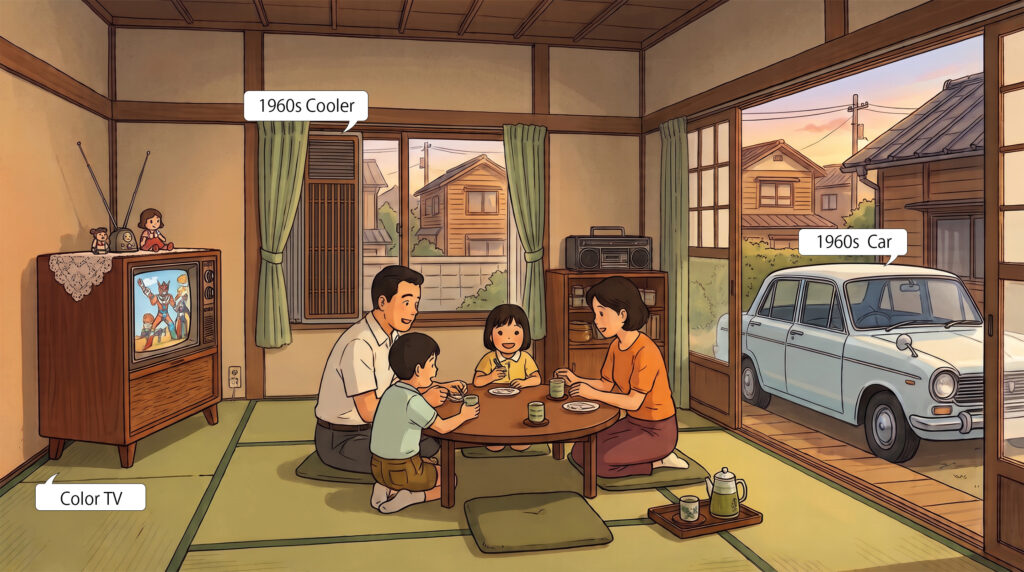
In My Own Family
My father wasn't the type to climb the career ladder, and he was by no means a so-called moretsu sarariman (猛烈サラリーマン, a gung-ho, work-obsessed salaryman). My mother grew rice and vegetables, and on top of that she did kimono tailoring (和裁, wasai) as piecework at home and worked as a water meter reader.
Back then, I think it was difficult for both husband and wife to work as full-time regular employees.
Frequently Asked Questions
- When was Japan's high-growth era? It was the roughly 20-year period from the mid-1950s to the first oil crisis in 1973.
- What was shūdan shūshoku (group employment)? It was a system, from the 1950s to the 1970s, in which junior high school graduates from rural areas went to work in the cities as a group.
Next time: My own experience of living through Japan's "employment ice age".
*I write these posts in Japanese, and Claude (an AI assistant) helps me translate them into English.
How Japan Has Changed, as Told by a Japanese Woman in Her 50s
- Part 1: Work in the High-Growth Era and the Father Who Put Work Before Family
- Part 2: The Employment Ice Age, Job Hunting as a Woman, and Long Hours as a Systems Engineer
- Part 3: Workplaces Changing Under Labour Shortages, and Japanese People Who Keep Working After Retirement
- Part 4: Do Japanese Women Really Treat Their Husbands Like ATMs? School Education and the Rise of Dual-Income Families
- Part 5: From Three-Generation Households to Nuclear Families, Husbands Who "Help" with Housework, and Osechi Today
- Part 6: Caring for My Grandparents at Home, Elderly Care in an Age of Only Children, and Japan's Ever-Evolving Ready-Made Meals ("Nakashoku")